Every summer from 1990 to 2001, my friends and I vacationed together for a week on a rented sailboat. The rentals were always "bareboat," which meant that we crewed the boat ourselves and sailed wherever we wanted. This isn't as crazy as it sounds -- our friend William Frank had his captain's certification and an impressive sailing resume, and our group included several strong and experienced teenagers who were capable of, and ready to serve the crew of a 12-meter sailing yacht. These boats were mono-hulls not the more comfortable catamarans, which allowed us to race over the water a what seemed like breakneck speeds. Our adventures took us to waters off Capri, Cape Cod, the Bahamas, Grenada, the BVI, St Martin, St. Lucia, Nevis, Antigua, Dominica, Anguilla and many more. illiam died in 2017, so from 2019 to 2023 my grandsons and I hired a captain and sailed waters off St Barts, the BVIs, and the Bahamas.
I'm less agile these days and I do most of my sailing on cruise ships. Not that I was ever much of a bareboat sailor -- my son Mike was much better and much more serious about his shipboard duties -- but I still think sailing is a terrific hobby and great fun.
...And inexpensive, contrary to the common misconception that sailing is a rich man's sport. It's not, in fact it's a relatively inexpensive way to vacation if you're prepared to "rough it." Most sailboats rent for less than $1,200 a day, including a captain and provisions. That's $200 / day / person with six people sailing. This is a small fraction of what it would cost to vacation at a Caribbean resort in an ocean-facing room; visit 5 or 6 nearby islands; swim on deserted beaches; and to dine and drink in exotic anchorages. Things will go wrong, like running out of water far from any supply, getting stuck on a sand bar, losing your engine, and worse, but coping with the unexpected is part of the fun.
The photos that follow will give you a feel for what bareboat sailing is like.
















I've been collecting watches for several years. One of the first things I learned was that there's a lot more to a watch than: its brand, the way it looks, and its price -- the criteria most of us use to buy one. Take the two watches shown below. One of them is a Cartier Tank Watch -- one of the most famous watches in the world -- which today costs about $15,000. The other is a "homage" to the Tank sold by Temu which costs $4. This is not a type-o, the watch costs $4!
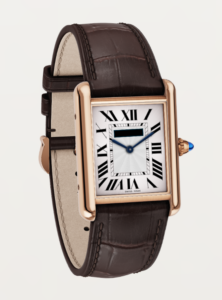

Can you tell them apart from their pictures. Believe me, even if you were holding them in your hand, you would not be able to tell which is which. Even wearing them for a few weeks would not reveal the secret conclusively. Sure, the winder on the reat Cartier feels more solid, and after a few months one of them would be off by a minute or two, but are these small differences worth $14,996?
In fact, like most things that cost a lot, what you're paying for is subtle. It's the materials, the craftsmanship, the precision, the name, the knowledge that the watch on your wrist is the genuine article. In other words, the more you know about a watch, the more valuable it is to you.
This is the idea behind collecting watches -- knowledge leads to appreciation. (By the way, the watch on the left is the real Tank from Cartier.)
So, what's important in a good watch? First, it's the BRAND. People like to buy from a watchmaker whose name they recognize. Even among brands though, there is a hierarchy. At the very top are prestigue brands like Patek Philippe, Audemars Piguet, and Vacheron Constantine (the "Holy Trinity"), which can easily cost hundred of thousands. Then come the luxury brands like Rolex, Omega, Cartier, Breitling, and Grand Seiko, which typically run up from $4-$5,000. Entry level brands (which cost from $1,000 to $5,000) include Tudor, Longines, TAG Heuer and Rado. Then there are the more resonably priced GADA (Go Anywhere, Do Anything) brands like Seiko, Citizen, Tissot, Hamilton, Casio and Tudor. At the very bottom of the watch cognicenti's list are the fashion brands like Fossil, Guess, Armani, Michael Kors, and Diesel. These trendy accessories, which are priced from low to ridiculous, are primarily clothing or lifestyle accents rather than items of horological value.
So, you can see where this is going. All watches tell time, but not all watch brands convey equal prestigue, cachet, and exclusivity to their owner. Snob appeal, often called "true appreciation," is a big part of owning a watch and sometimes of collecting them. If you're poor like me though, focusing on the brand is a non-starter. Fortunately, there are lots of other things to apprciate about a watch like its:
- Movement (what kind of engine [mechanical/automatic, electrical (quartz)] does it have?)
- Material and Build Quality (Is the crystal saffire, glass, or plastic? Is the case gold, silver, steel, or ceramic? How many jewels are used in the mechanism? Is the strap leather? Etcetera.
- Accuracy and Performance (Does it keep good time for a long period? Does it need servicing often?)
- Complications (What does it do beyond telling time?)
- Water Resistance and Durability (How long is it going to last in the real world?)
Every collection needs a theme or a challenge. For me, that was to collect a dress, sport, and banger (everyday) watch for three price categories -- $500, $2,000, and $8,000.
al include prestige, cachet, and exclusivity, w
one small part of a watch's story.
Take the watch pictured to the right. It looks like a Cartier Tank Watch, one of the most famous, which today costs about $4,000. Unfortunately, this one is a replica from Temu that costs $4. At first glance,it's 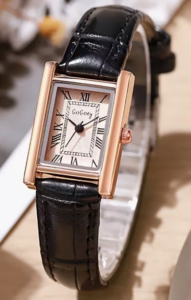
Collecting is fun, he says, because it takes you behind the pricing to the amazing design, engineering, and aesthetic that goes into a good watch. People assume that any watch collection is valuable, and that collecting watches is for the rich and famous--the pezzinoavante as Michael Corleone calls them in "The Godfather". It's not, most collections are modest and most collectors are ordinary people who are simply fascinated by these mechanical marvels.
Jim's collection, for example, has very little resale value today. Maybe in a hundred years one or two of my more interesting watchs will have become "famous" and command collector prices, but not in his lifetime. So, what beyond the monetary value makes a watch different? After all, in the final analysis watches they all do the same thing -- tell time. He pondered this for a while then created the following chart to break it down for himself.
Here's how it works...
First there's "the name," where prestigous brands like Patek Phillippe are found. At the bottom are fashion brands like Gucci and Fossil. No matter what these fashion brands cost or how rare they are, they are dismissed by serious collectors. Next comes the "movement," that is, the watch's motor. These motors are categorized by mechanisms (quartz or mechanical), power source (battery, solar...), and manufacturer (e.g., Seiko). Third is the "function," that is, what does the watch do? Yes, they all tell time, but they can also do lots of other things (called complications) from displaying date, day, time zones, and air pressure to correcting for local difference in the earth's gravity. Then there are the "materials," what the watch is made of. A stainless-steel watch case with a sapphire crystal and a titanium band is light, strong, costly, and accurate, while a plastic watch with an acrylic face and a rubber band is often heavy, fragile, inexpensive, and inaccurate. Lastly, there's "everything else," all the "soft" features like size, design, finish, color, and history that further separate one watch from another. (BTW, while Apple calls their device a watch, most collectors would call it a computer for your writst.)
More complicated than you thought, right? Which brings us back to collecting. Every collection needs a theme. For example, the brand like Rolex or Breitling is a favorite theme. Another is the technology, e.g., powered by wrist movement or solar. The important thing is to have a theme and not just collect randomly.
Jim's collection's theme is "cost and purpose." He wanted to collect watches in groups of three where each group would contain a sport watch, a bang-around everyday watch (a banger), and a dress watch. The total cost of the watches in the three groups was to be less than $500, $2000, and $8000. This is a pretty standard way for a newbie like him, one without a lot of knowledge, experience, or money, to start collecting.
The <$500 group was easy. He bought an indestructable Casio MW240 for $25 as his banger, a Glock made of "gun" metal steel as his sport watch for $425, and a no-name replica of a Cartier Tank watch from Temu as his dress watch for $4. He admits that he wears the $4 Temu for fun sometimes just to watch how people react to learning that the watch they think cost thousands actually cost $4.
The <$2,000 group was more of a challenge primarily because he didn't want to spend $2,000 on watches he wasn't going to wear. The banger he selected was the "indestructible" Victornox which cost $200. (Victornox substantiates this claim by driving a 64-ton tank over the watch.) His sport watch in this castegory is the all-titanium Breitling Aerospace he bought in St. Barts in 1990 for $1,000. Talk about accuracy, this watch has not lost more than a couple of seconds a year for 35 years. His dress watch in this category is the $200 Orient, which is great looking, an excellent timekeeper, and automatic (wrist-movement powered, needing no battery or winding).
The <$8,000 group is four time more challenging than the $2,000 for the same reason--he didn't want to spend $8,000 on watches he was not going to wear. Unfortunately, he started this group by buying the current version of the all-titanium Breitling Aerospace. Frankly, this watch was a disappointment -- it's twice as big as his 1990 Brietling, it's hard to read the time with all the F-18 bling on its face, and it cost 4x more. Not a great start, but another good lesson about price versus value. (Remember, they all tell time.) He's hoping to make up for this misstep with his next two selections, which are still to come.
Video editing has been a hobby of Jim's for a long time, long enough so that he should probably be a lot better at it. In any case, examples of his early and late work are on the Videos page of this website. The tools he uses are: Cyberlink's Power Director editor (a replacement for Adobe Premier when Premier went to subscription), a Sony RX10 IV mirrorless camera, a Sony Alpha 7 III zoom camera, and a Sony FDR-AX700 camcorder. This sound impressive, but he claims that these are very modest tools for a video editor, even a hobbiest. The video below is an example of his recent editing work ... not great, but not embarassing either.
In 2023 Jim decided that he was done with travel. At his age it was just more trouble than it was worth to visit places he'd already visited many times. He couldn't just sit home and do nothing, though; a thought that eventually spawned the idea of a staycation--a vacation spent at home. And why not when your home is New York City, the most visited place in the world? The problem doing this from home was commuting--traveling from Staten Island to Manhattan--which was Yvonne's approach.
Instead, over her strong objections, Jim set his sights on a Manhattan apartment they could use as a pied-a-terre...without realizing that the "average" apartment in the city cost $1.4 million. Once he reconciled to this reality, he began looking in ernest. The rest of this Manhattan section addresses the apartment he and Yvonne finally bought, and what one needs to know to live and survive in Manhattan.
Manhattan's a big place, more importantly, it's a diverse place. Every neighborhood from Chelsea to the Village is unique in supporting a particular lifestyle. To put you in the right frame of mind, here's a "Manhattanhedge" (Manhattan's Stonehenge) picture looking from east to west along 57th Street just as the sun is setting.
Yvonne still thought buying was a dumb idea, but she participated anyway "under protest."
It took them a year to decide that the Upper West Side around Lincoln Center (59th to 72nd Street) was right for them. As a neighborhood, it's generally quieter with less car, truck, bus, bike, and people traffic; it has lots of great restaurants and museums; it's close to Broadway and Lincoln Center (not that they go very often); and the park is just a few steps away. Like the Upper East Side, it's mostly residential, whereas most neighborhoods below 59th Street are either mostly business or a mix of commercial and residential.
They also decided -- after being rejected once for being too poor -- that they wanted a condo rather than a co-op. The idea of an intransigent co-op board preventing us from selling was just too hard to swallow. (Co-op boards have a legal right to disqualify a buyer while condo boards can only demand the right to buy the apartment themselves.)
Eventually, after studying hundreds and touring dozens, they decided on a well-lit, one-bedroom condo in the Lincoln Square area with a great view. They didn't truly appreciate how important the view was until they realized that their part time, pied-a-terre usage model favored a view over more space. This holds true even today as they consider moving up to a larger place.
Both of them immediately knew that the apartment in the Copley at 2000 Broadway was what we wanted. It's a large one-bedroom (891 sq. ft.) with an unimpeded southern view down Broadway from 68th Street. It's not a flex unit (i.e., one that is easy to convert to a two-bedroom), but it's large enough to sleep 4-5 comfortably or even more in a pinch, which allows them to host the grandkids who love visiting the city. After a month of haggling, it was theirs, and after six months of stressful shopping, it was furnished, complete with a Murphy bed and a closet office.
...Finally, they had a home away from home in the most popular destination in the world.
In 2023 Jim decided that he was done with travel. At his age it was just more trouble than it was worth to visit places he'd already visited many times. He couldn't just sit home and do nothing, though; a thought that eventually spawned the idea of a staycation--a vacation spent at home. And why not when your home is New York City, the most visited place in the world? The problem doing this from home was commuting--traveling from Staten Island to Manhattan--which was Yvonne's approach.
Instead, over her strong objections, Jim set his sights on a Manhattan apartment they could use as a pied-a-terre...without realizing that the "average" apartment in the city cost $1.4 million. Once he reconciled to this reality, he began looking in ernest. The rest of this Manhattan section addresses the apartment he and Yvonne finally bought, and what one needs to know to live and survive in Manhattan.
Manhattan's a big place, more importantly, it's a diverse place. Every neighborhood from Chelsea to the Village is unique in supporting a particular lifestyle. To put you in the right frame of mind, here's a "Manhattanhedge" (Manhattan's Stonehenge) picture looking from east to west along 57th Street just as the sun is setting.
Yvonne still thought buying was a dumb idea, but she participated anyway "under protest."
It took them a year to decide that the Upper West Side around Lincoln Center (59th to 72nd Street) was right for them. As a neighborhood, it's generally quieter with less car, truck, bus, bike, and people traffic; it has lots of great restaurants and museums; it's close to Broadway and Lincoln Center (not that they go very often); and the park is just a few steps away. Like the Upper East Side, it's mostly residential, whereas most neighborhoods below 59th Street are either mostly business or a mix of commercial and residential.
They also decided -- after being rejected once for being too poor -- that they wanted a condo rather than a co-op. The idea of an intransigent co-op board preventing us from selling was just too hard to swallow. (Co-op boards have a legal right to disqualify a buyer while condo boards can only demand the right to buy the apartment themselves.)
Eventually, after studying hundreds and touring dozens, they decided on a well-lit, one-bedroom condo in the Lincoln Square area with a great view. They didn't truly appreciate how important the view was until they realized that their part time, pied-a-terre usage model favored a view over more space. This holds true even today as they consider moving up to a larger place.
Both of them immediately knew that the apartment in the Copley at 2000 Broadway was what we wanted. It's a large one-bedroom (891 sq. ft.) with an unimpeded southern view down Broadway from 68th Street. It's not a flex unit (i.e., one that is easy to convert to a two-bedroom), but it's large enough to sleep 4-5 comfortably or even more in a pinch, which allows them to host the grandkids who love visiting the city. After a month of haggling, it was theirs, and after six months of stressful shopping, it was furnished, complete with a Murphy bed and a closet office.
...Finally, they had a home away from home in the most popular destination in the world.
...Isn't easy. Congestion pricing, over-the-top garage fees, and bizare parking-meter rules have made it tricky to get there; the Byzantine bus and subway routes are the only practical way to get around once you're there; and knowing what's around to see and do requires some serious research. Hopefully, the following makes all of these challenges easier.
DRIVING between STATEN ISLAND and 2000 BROADWAY
-
The fastest way from SI to Manhattan is the Verrazzano Bridge to the Battery Tunnel, north on West Street to the 79th Street exit, then south on Broadway to 68th Street.
Cost: $13 in tolls for SI residents with an EZpass; Time: about 45 minutes from the Verrazzano.
NOTE: If you leave West Street, you will incur the $9 congestion fee. -
To save $7 ... if the Brooklyn Bridge is reasonably clear take it to FDR north, get off at 61st Street, take 66th Street crosstown (west), then Broadway north to 68th Street.
Cost: $6; Time: an additional 10-30 minutes. -
Going from Manhattan to SI, go crosstown (east) on 65th Street, south to 61st Street, left onto FDR south, and cross over the Brooklytn Bridge.
Cost $6; Time: about 45 minutes
IMPORTANT NOTE: To go south on West Street during the Westside Highway entrance construction, you need to go NORTH on Broadway to 96th Street then go south on the WSH until you get to West Street. This will take 30 minutes more than using going east and using the FDR.
The FASTEST way from 2000 BROADWAY TO STATEN ISLAND using public transportation
- Walk to 66th Street (for local) or 72nd Street (for express)
- Take the "7th Avenue 1" train downtown to Rector Street
- Walk south on Broadway to Maiden Lane
- Take the "SIM 1c" express bus on Broadway to Staten Island
- Get off the bus at Steuben Street and W. Fingerboard Road
The FASTEST way from STATEN ISLAND TO 2000 BROADWAY using public transportation
- Take the "SIM 1c" express bus on Steuben Street and W. Fingerboard Road to Manhattan. (Note: It goes North on Church to 6th then to 57th St. so it’s slow, especially during rush hours. Comes every 20 minutes at midday.)
- Take the M5 or the M7 from 5th Avenue and 57th uptown
- Get off at Broadway and 69th Street
The EASIEST way from STATEN ISLAND TO 2000 BROADWAY using public transportation
- Take the "SIM-1C" express bus on Steuben Street and W. Fingerboard Road to Manhattan
- Get off the bus in Manhattan at Rector Street
- Walk one block east to Broadway
- Take the "7th Avenue 1" train uptown to 66th Street and Broadway (local) or to 72nd Street and Broadway (express)
- Walk to 68th Street
The EASIEST way from 2000 BROADWAY TO STATEN ISLAND using public transportation
- Take the M104, M5, or M7 at Broadway and 68th and get off at 7th and 57th.
- Walk to Central Park South and 6th Avenue
- Take the "SIM 1C" (slower but runs all day) or the "SIM 10" (faster but starts at 2pm) express bus to Staten Island
- Get off at Steuben Street and W. Fingerboard Rd.
If you have great eyesight and lots of patience, the routes are well desribed in maps for
BUSES: https://www.mta.info/map/5391, and for
SUBWAYS: nycsubway.org/wiki/New_York_City_Subway_Route_Map_by_Michael_Calcagno.
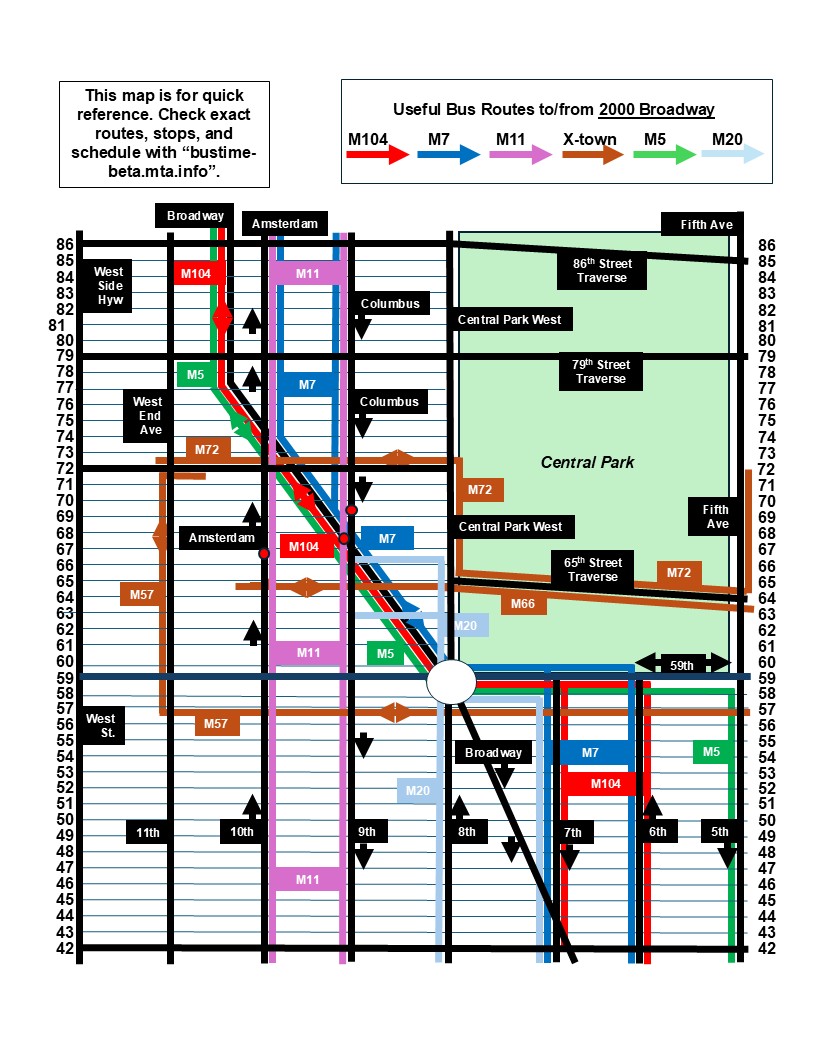
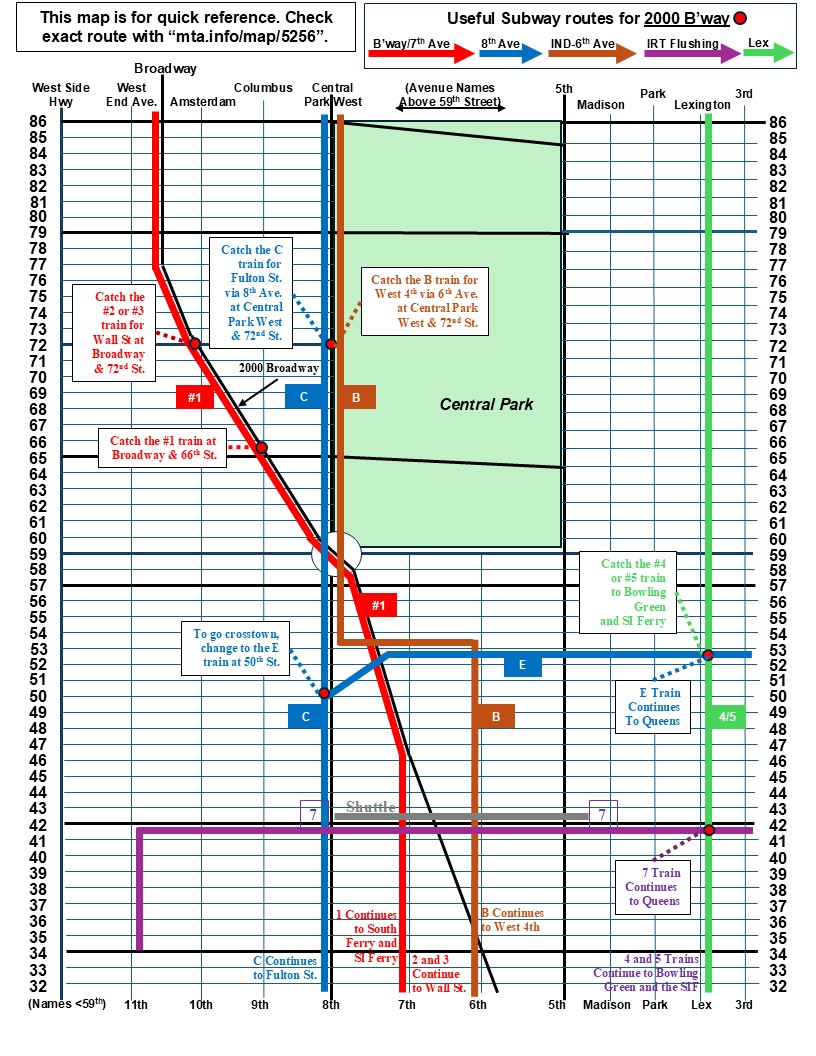
If you already know the right bus or train and need to know the schedule, just enter the bus/train name into Google, e.g. M11 bus schedule. If you need a simpler map and live at 2000 Broadway, use the following:
FOR BUSES...
FOR SUBWAYS...
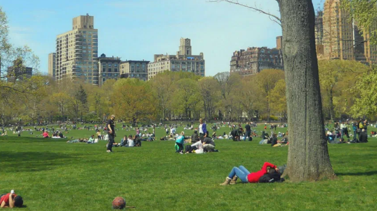
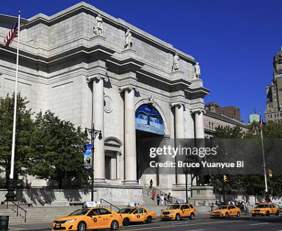
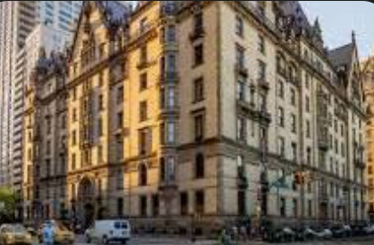
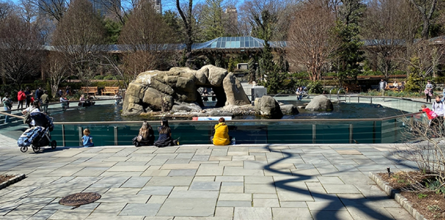
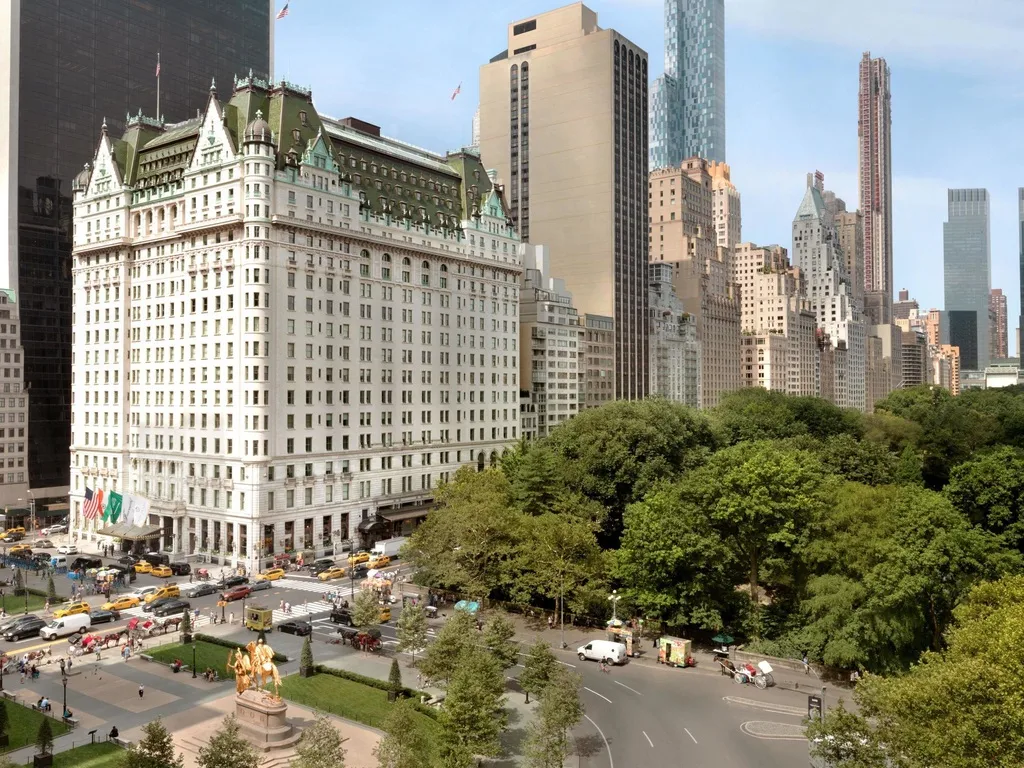
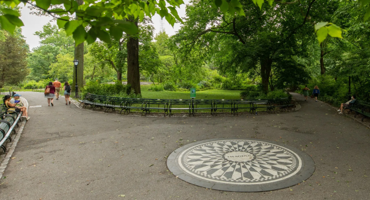
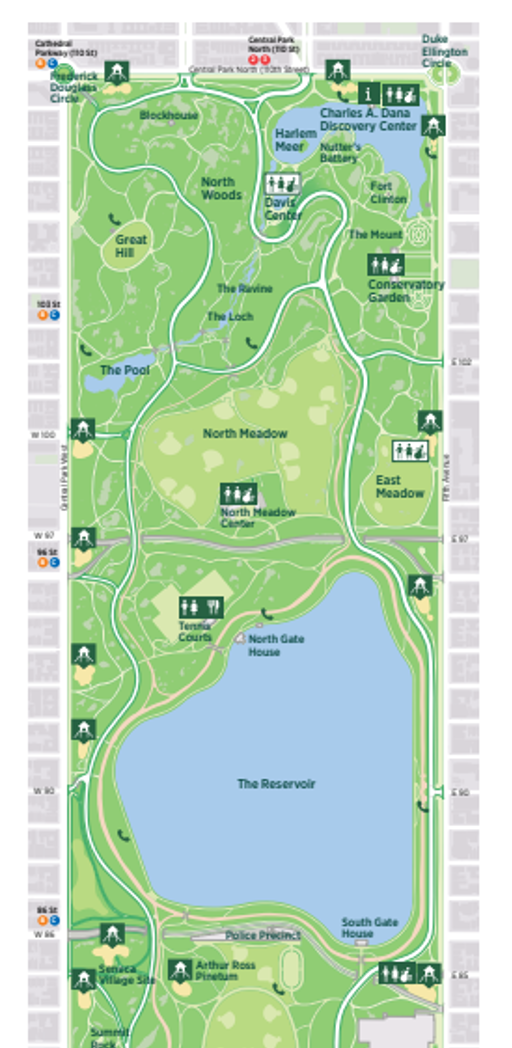
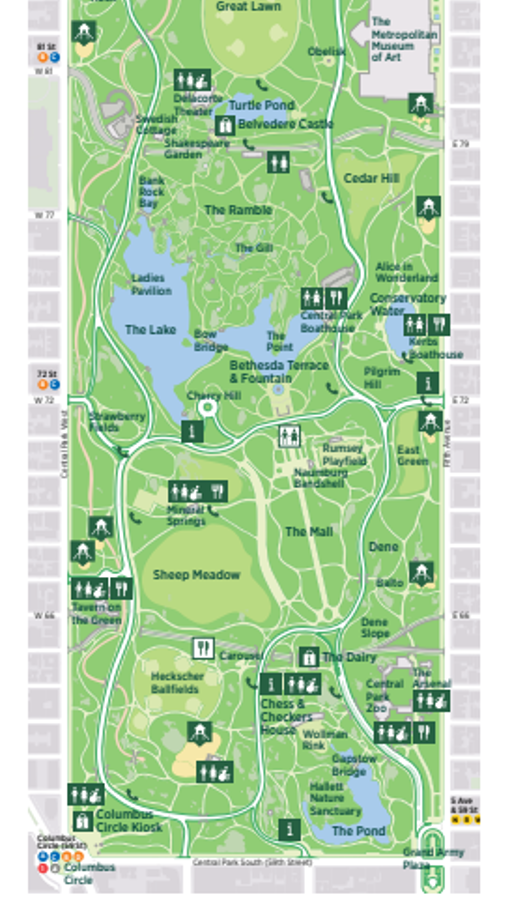
Here are some images of places to visit in the neighborhood.
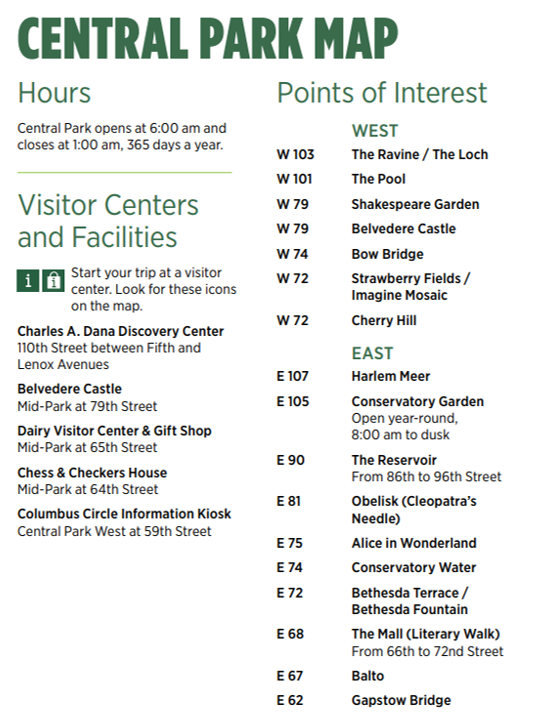
And more...